
4Q521 The Messianic Apocalypse
Text Fragments of 4Q521
[the hea]vens and the earth will obey His Messiah, and none therein will stray from the commandments of the holy ones.
Seekers of the Lord, strengthen yourselves in His service!
All you hopeful in (your) heart, will you not find the Lord in this?
For the Lord will consider the pious (hasidim) and call the righteous by name.
Over the poor His spirit will hover and will renew the faithful with His power.
And He will glorify the pious on the throne of the eternal Kingdom.
He who liberates the captives, restores sight to the blind, straightens the b[ent] (Ps. cxivi, 7-8).
And f[or] ever I will clea[ve to the h]opeful and in His mercy ...
And the fr[uit ... ] will not be delayed for anyone
And the Lord will accomplish glorious things which have never been as [He ... ]
For He will heal the wounded, and revive the dead and bring good news to the poor (Isa. Ixi, 1 ). ... He will lead the uprooted and make the hungry rich ...
Fr.7
... [the ear]th and all that is on it; and the sea [and all that is in it] and all the ponds of water and rivers who are doing good before the Lor[d] ... ... like those who curse and are (destined) for death [when] the Lifegiver will raise the dead of His people.
And we will thank and proclaim to you the righteousness of the Lord, who ..
What is 4Q521 "Messianic Apocalypse"
4Q521 was found in Cave 4 at Qumran, among the Dead Sea Scrolls. It is preserved in a few parchment fragments dated to the late 1st century BCE – early 1st century CE. The main surviving section is fragment 2, column ii, edited originally by Jean Starcky and later by Émile Puech.
The text is written in Biblical Hebrew, with phrasing similar to Psalms and Isaiah. Its grammar and word order show the careful poetic style used in other Qumran hymns and wisdom writings.
Scholars classify it as a messianic-apocalyptic psalm — a work blending hymnic praise, prophecy, and eschatological expectation. It celebrates divine renewal through “His Messiah,” linking heaven and earth in obedience to God’s purpose.
Core Message
- The heavens and earth will listen to His Messiah.
- The righteous and ḥasidim (pious) are honored upon a throne of the eternal kingdom.
- The Spirit of God hovers over the poor and renews the faithful.
- The Lord frees captives, opens blind eyes, straightens the bent, revives the dead, and brings good news to the poor.
These declarations mirror Isa 35:5-6, Isa 61:1-2, and Ps 146:7-8, forming one of the earliest Jewish texts to ascribe such miraculous works to a divinely empowered Messiah.
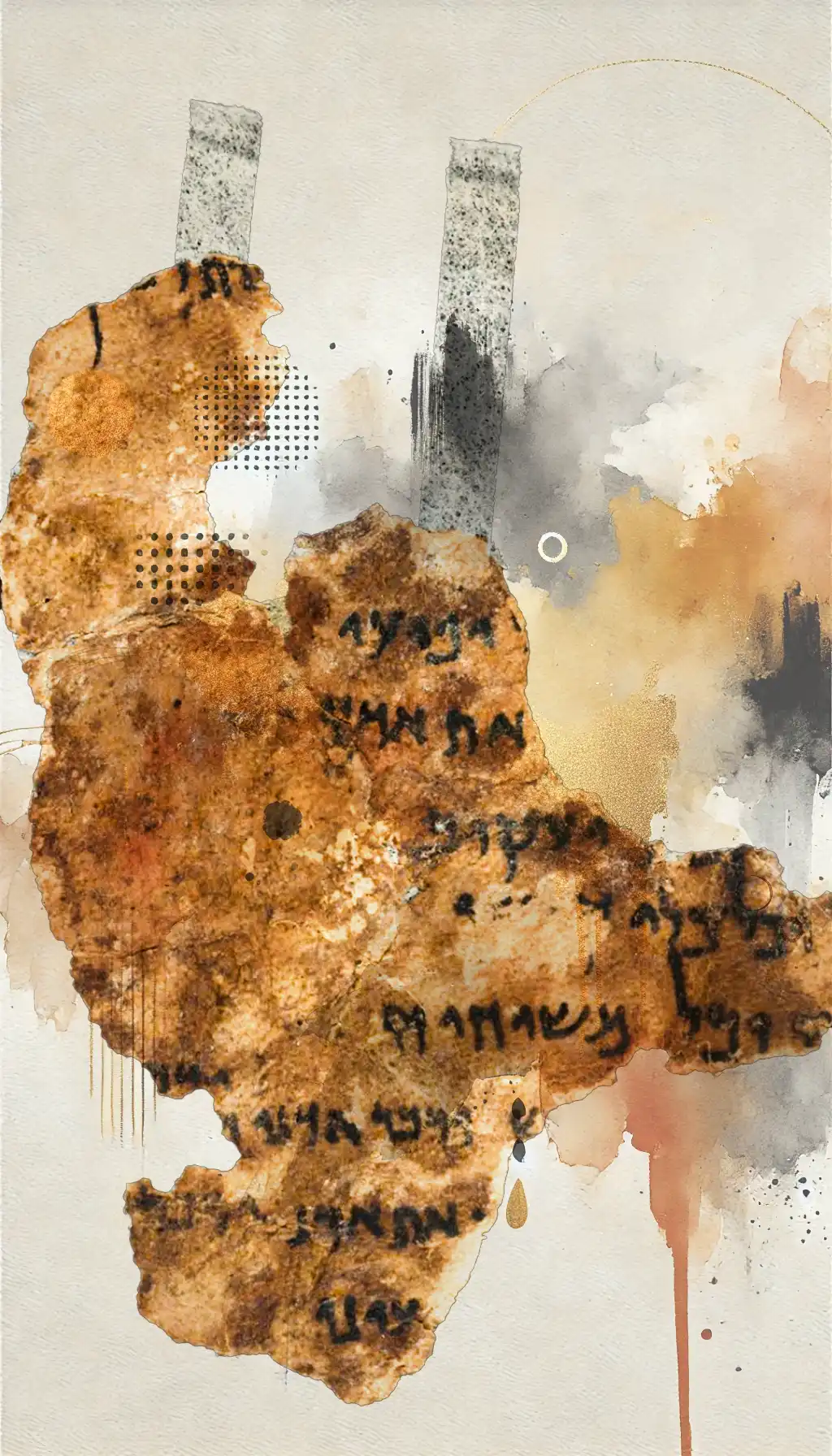
Table of Contents
Parallels in Scripture
“He will open the eyes of the blind” [Isaiah 35:5] This is a healing motif.
“He will raise the dead” [Isaiah 26:19] This is Resurrection hope.
“He will bring good news to the poor” [Isaiah 61:1] This is a Gospel motif.
“Captives will be freed” [Psalm 146:7] This is a Deliverance theme.
Yeshua's Message to John the Baptist
In [Luke 7:22] and paralleled in [Matthew 11:4-5], Yeshua tells John the Baptist that:
“Go and tell John what you have seen and heard: The blind receive sight, the lame walk, lepers are cleansed, the deaf hear, the dead are raised up, and the poor have good news preached to them.”
This references six different items that Yeshua does which John should connect in his mind to the role of the Messiah which is why Yeshua is reassuring him this way. Four of the six are from [Isaiah 35 & 61] the other two are referenced lightly in other places but explicitly said here in 4Q521. This is the document that an Essene priest would have thought of when a possible Messiah was doing miracles and spreading information. He would have needed to "cleanse lepers" as well as "raise the dead". There is a very good chance that Yeshua is quoting John's own documents to him to make the point that the Messiah is indeed here to do what he was foretold to do and there isn't a second greater one to come (see Messiah ben Joseph & Messiah ben David), only a undiscussed between them second visitation to fulfill the Kingdom.
Theological Focus
4Q521 portrays the coming of God’s reign through a Spirit-empowered anointed one. It joins creation language (“Spirit hovering”) with restoration language (“revive the dead”). Rather than violent conquest, the Messiah’s signs are healing, renewal, and liberation, suggesting a cosmic restoration of justice and mercy.
Read "Dead Sea Scroll 11Q13"
Also called 11QMelchizedek, read about the prediction of the timing of Messiah.
Read "John the Baptist"
For more information see "Johhn the Baptist".
Read "Zadok Priests"
For more information see "Zadok Priests".