
Correcting a Misconception
Christology | Jesus | John | Mark
Mark Calls Jesus Yahweh More than John Does
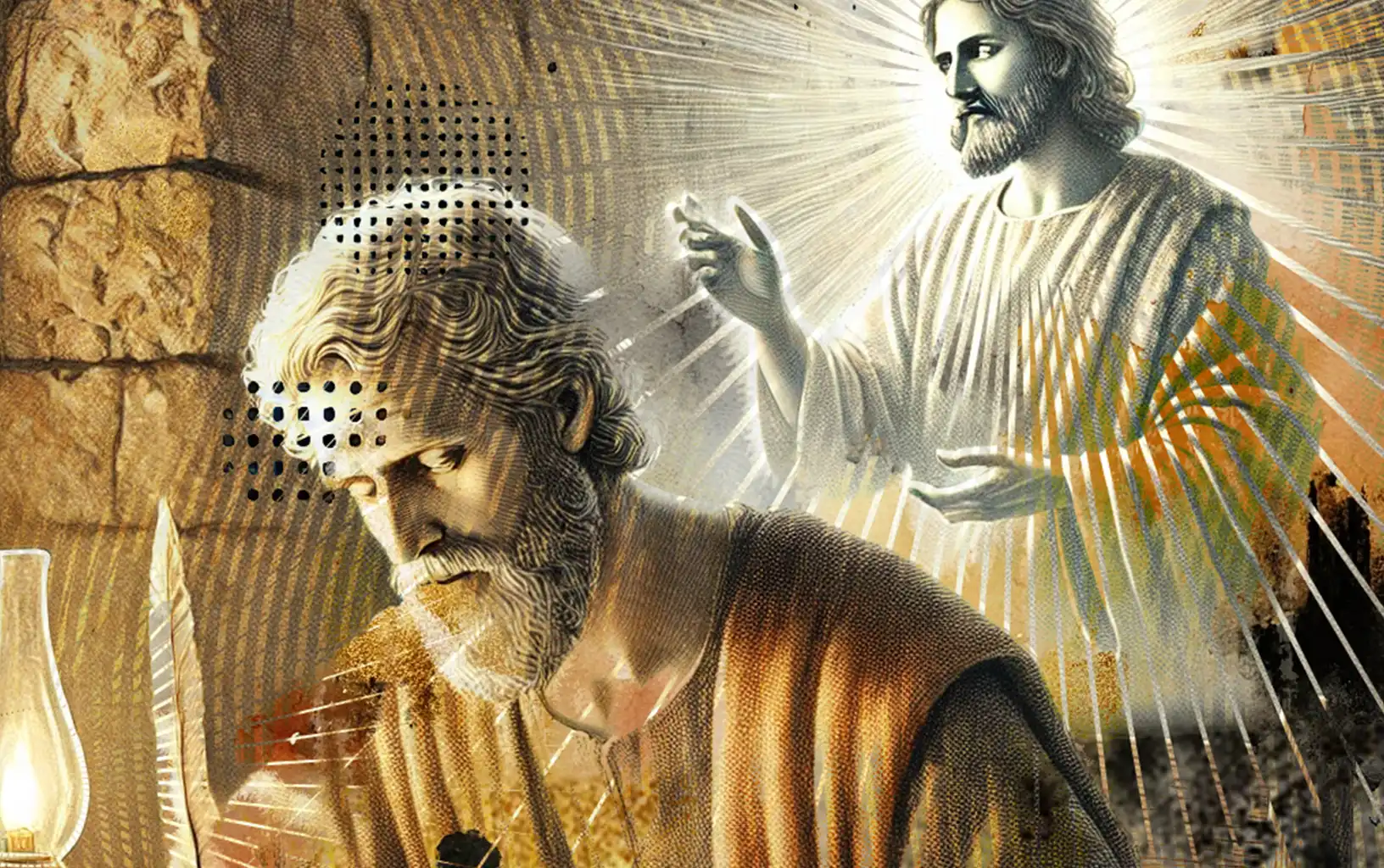
A common scholarly assertion is that the Gospel of Mark presents a "low" Christology compared to the Gospel of John, where Jesus is explicitly identified as divine from the very first verse: "In the beginning was the Word, and the Word was with God, and the Word was God." (John 1:1).
However, a deeper analysis of Mark’s Gospel reveals a strikingly high Christology—perhaps even stronger in its implications than John’s direct statements.
Through allusions to the Hebrew Scriptures, Jesus' divine authority, and his self-identification, Mark presents Jesus as Yahweh Himself.
This article will examine key passages in Mark to demonstrate that Jesus is portrayed as divine from the outset.
Mark 1: John the Baptist Prepares the Way for Yahweh—Yet Jesus Arrives
The Gospel opens by citing Isaiah 40:3:
"A voice of one crying in the wilderness, 'Prepare the way of the Lord, make His paths straight.'" (Mark 1:3)
In Isaiah, this verse refers to preparing the way for Yahweh (יהוה). But in Mark’s Gospel, it is John the Baptist preparing the way for Jesus. If John is making the path straight for Jesus, but Isaiah says the path is being prepared for Yahweh, then Jesus must be Yahweh.
This sets the tone for the entire Gospel: Mark does not need to explicitly state Jesus' divinity; rather, he assumes it, embedding it in the very first chapter.
Mark 2: Jesus Forgives Sins—A Divine Prerogative
Jesus heals a paralyzed man and declares:
"Son, your sins are forgiven." (Mark 2:5)
The scribes immediately object:
"Why does this man speak like that? He is blaspheming! Who can forgive sins but God alone?" (Mark 2:7)
Instead of correcting them, Jesus affirms His authority by healing the man to prove that He has the power to forgive sins:
"But that you may know that the Son of Man has authority on earth to forgive sins..." (Mark 2:10)
Jesus does not forgive in the name of God, as prophets might, but with His own authority. Since only God can forgive sins, and Jesus demonstrates that He has this authority, Mark subtly declares His divinity.
Mark 3: Jesus' Authority Over Satan
Jesus is accused of casting out demons by Satan’s power, but He responds:
"No one can enter a strong man's house and plunder his goods unless he first binds the strong man. Then indeed he may plunder his house." (Mark 3:27)
In Jewish thought, the "strong man" is Satan, and only God has the authority to restrain him (Isaiah 49:24-25). Yet Jesus declares that He is the one who binds Satan and plunders his domain.
This claim is staggering—Jesus places Himself in the role of Yahweh, who alone has dominion over Satan.
Mark 4: Jesus Commands the Sea—Just Like Yahweh
Jesus rebukes the storm:
"Peace! Be still!" (Mark 4:39)
His disciples are left in awe:
"Who then is this, that even the wind and the sea obey Him?" (Mark 4:41)
The Old Testament provides the answer:
- Psalm 107:28-29: "Then they cried to Yahweh in their trouble, and He delivered them from their distress. He made the storm be still, and the waves of the sea were hushed."
- Job 38:8-11: Yahweh alone controls the sea.
Since commanding the elements is a divine prerogative, Jesus’ mastery over nature equates Him with Yahweh.



Mark 5: Jesus Raises the Dead with His Own Authority
Jesus raises Jairus’ daughter simply by speaking:
"Little girl, I say to you, arise." (Mark 5:41)
By contrast, Old Testament prophets like Elijah and Elisha had to pray to Yahweh before performing miracles (1 Kings 17:21-22, 2 Kings 4:33).
Jesus, however, acts without invoking Yahweh—because He is Yahweh.
Mark 6: Jesus Walks on Water—The Divine Walker
Mark 6:48 states:
"He meant to pass by them."
This unusual phrase mirrors Exodus 33:19-22, where Yahweh "passes by" Moses, revealing His glory. Furthermore:
- Job 9:8: "God alone stretches out the heavens and treads upon the waves of the sea."
- In Mark, Jesus does what only Yahweh does—He walks on the sea.
This is not a mere miracle; it is an Old Testament signature of divinity.
Mark 7: Jesus Heals the Deaf and Mute—Fulfilling Yahweh’s Role
In healing the deaf-mute man, Jesus fulfills Isaiah 35:5-6, which prophesies:
"Then the eyes of the blind shall be opened, and the ears of the deaf unstopped."
This passage refers to Yahweh's coming—yet in Mark, Jesus performs the healing. This implies that Jesus is the fulfillment of Yahweh’s promised arrival.
Mark 8: Jesus Feeds the Multitude—Echoing Yahweh’s Provision
Just as Yahweh provided manna in the wilderness (Exodus 16), Jesus miraculously feeds the people. His act parallels divine provision, reinforcing His identity as Yahweh.
Mark 9: The Transfiguration—Jesus as the Divine One
On a mountain, Jesus shines brighter than any earthly light:
"His clothes became radiant, intensely white, as no launderer on earth could bleach them." (Mark 9:3)
Moses and Elijah appear, speaking with Him. Both had previously spoken with Yahweh on mountaintops (Exodus 33:18-23, 1 Kings 19:11-13).
The implication is clear: Jesus is the divine figure Moses and Elijah had encountered in the past.
Mark 14: Jesus’ Trial—The Climactic Declaration
At His trial, Jesus is asked:
"Are you the Christ, the Son of the Blessed One?"
Jesus responds:
"I am, and you will see the Son of Man seated at the right hand of Power and coming on the clouds of heaven." (Mark 14:62)
Jesus references Daniel 7:13-14, where the "Son of Man" is enthroned beside Yahweh and receives everlasting dominion.
The high priest tears his robes—a sign of hearing blasphemy. The Jewish leaders understood Jesus’ words as a direct claim to divinity.
Despite its reputation for presenting a "low" Christology, Mark's Gospel subtly and powerfully affirms Jesus as Yahweh:
- He fulfills Yahweh’s prophecies (Mark 1).
- He forgives sins (Mark 2).
- He commands nature (Mark 4).
- He binds Satan (Mark 3).
- He raises the dead by His own power (Mark 5).
- He walks on the sea as Yahweh does (Mark 6).
- He is glorified in the Transfiguration (Mark 9).
- He claims divine authority at His trial (Mark 14).
The Gospel of Mark does not present a Jesus who becomes divine over time. Instead, from the very first verse, Mark assumes his divinity—hidden in plain sight for those with eyes to see.
-The Tutor
Read "John the Apostle"
To learn more about just how John writes.
Read "John the Baptist"
To learn about how John the Baptist got his call to make straight the path.